About Fertility
Dolly Parton’s Endometriosis Story: What Has Changed for Women Today

The world is remembering Dolly Parton for an extraordinary legacy that reaches far beyond music. She was a songwriter, performer, businesswoman, philanthropist and an unmistakable voice for generations of women.
There is also a more personal part of her story that may resonate with the millions of women affected by endometriosis.
In the early 1980s, at the height of her career, Parton experienced serious reproductive health problems that were later attributed to endometriosis. She ultimately underwent a partial hysterectomy, ending her ability to carry a pregnancy.
It was an experience she would later speak about publicly, at a time when reproductive health, infertility and endometriosis were discussed far less openly than they are today.
More than four decades later, her experience is also a reminder of how much has changed.
For people diagnosed with endometriosis today, a hysterectomy is not an inevitable outcome. Advances in diagnosis, fertility treatment and fertility-preserving surgery mean there are more opportunities to manage the disease while considering something that matters deeply to many patients: their future fertility.
Did Dolly Parton Have Endometriosis?
Yes. Dolly Parton experienced severe endometriosis and other gynecologic health problems during the early 1980s. She underwent a partial hysterectomy in 1984, when she was in her 30s, and was unable to have biological children afterward.
Parton later spoke about how profoundly the experience affected her, both physically and emotionally.
Her story unfolded during a very different era of reproductive medicine. Endometriosis was less understood, fertility preservation options were extremely limited, and many of the minimally invasive surgical and assisted reproductive technologies available today were either in their infancy or did not yet exist.
That context matters.
A diagnosis of endometriosis today does not mean a patient will follow the same path.
What Is Endometriosis?
Endometriosis is a chronic condition in which tissue similar to the lining of the uterus grows outside the uterus. It may be found on the ovaries, fallopian tubes, pelvic lining and other surrounding organs.
The condition can cause inflammation, scar tissue and adhesions and may interfere with normal reproductive function.
Common symptoms of endometriosis can include:
- Severe or worsening menstrual pain
- Chronic pelvic pain
- Pain during or after intercourse
- Pain with bowel movements or urination, particularly during menstruation
- Heavy or irregular periods
- Digestive symptoms
- Difficulty becoming pregnant
Some people with endometriosis have significant symptoms, while others may have few or no noticeable symptoms. In fact, infertility can sometimes be what first leads to an endometriosis diagnosis.
Can Endometriosis Cause Infertility?
Yes, endometriosis can make it more difficult to become pregnant, but having endometriosis does not mean you cannot have a baby.
Endometriosis may affect fertility in several ways. Inflammation and scar tissue can alter the pelvic environment, adhesions can affect the fallopian tubes and ovaries, and ovarian endometriomas may affect ovarian function or egg reserve. The disease can also distort reproductive anatomy in more advanced cases.
The effect on fertility varies significantly from person to person.
Some people with endometriosis conceive without fertility treatment. Others may benefit from surgery, fertility medications, intrauterine insemination (IUI), in vitro fertilization (IVF), or a combination of approaches.
This is why individualized evaluation is so important.
Does Endometriosis Mean You Will Need a Hysterectomy?
No. Having endometriosis does not automatically mean you will need a hysterectomy.
A hysterectomy removes the uterus and eliminates the ability to carry a pregnancy. For someone who wants to become pregnant now or in the future, preserving the uterus and healthy reproductive tissue whenever medically appropriate can therefore be an important consideration when evaluating treatment.
Today, treatment for endometriosis may include medical management, minimally invasive surgery, fertility treatment, fertility preservation, or careful monitoring depending on a patient’s symptoms, age, disease severity and reproductive goals.
Even surgery does not necessarily mean removing reproductive organs.
Advanced reproductive surgery can often focus on removing endometriosis and scar tissue while preserving healthy reproductive anatomy whenever possible.
Endometriosis Treatment Has Changed Since Dolly Parton’s Surgery
Dolly Parton’s experience occurred more than 40 years ago. Reproductive medicine and minimally invasive gynecologic surgery have advanced substantially since then.
Today, patients have options that simply were not widely available to women facing severe endometriosis in the early 1980s.
One of the most important changes is that treating endometriosis and thinking about future fertility can be part of the same conversation.
Depending on an individual’s circumstances, modern endometriosis care may include:
Fertility Evaluation
For patients who want children now or in the future, evaluating ovarian reserve and other aspects of reproductive health can help inform treatment decisions.
Fertility-Preserving Surgery
Minimally invasive laparoscopic and robotic techniques can allow highly skilled reproductive surgeons to remove endometriosis and adhesions while working to preserve the uterus, ovaries and other healthy reproductive anatomy whenever medically appropriate.
Fertility Preservation
For some patients, freezing eggs or embryos before surgery or as endometriosis progresses may be worth discussing, particularly when there are concerns about ovarian reserve or ovarian involvement.
IVF and Other Fertility Treatments
For patients experiencing infertility, assisted reproductive treatments such as IVF can sometimes help overcome fertility challenges associated with endometriosis.
There is no single treatment pathway that is right for everyone. The best approach depends on the extent and location of the disease, symptoms, age, ovarian reserve, previous treatment and an individual’s family-building goals.
Why Fertility Goals Should Be Part of the Endometriosis Conversation
For someone experiencing significant endometriosis symptoms, understandably, the immediate priority may be finding relief.
But when surgery or other treatment is being considered, there is another question worth asking:
How could this treatment affect my fertility now or in the future?
That question can be especially important when endometriosis involves the ovaries.
Surgery can be an important part of endometriosis treatment for some patients, but operating on ovarian endometriomas may also affect healthy ovarian tissue and ovarian reserve. For this reason, the decision about whether to pursue surgery, fertility treatment, fertility preservation, or some combination should be highly individualized.
For patients who hope to have children, involving a reproductive endocrinologist or reproductive surgeon early can allow fertility goals to become part of the treatment plan rather than something considered afterward.
A Fertility-Preserving Approach to Endometriosis Surgery
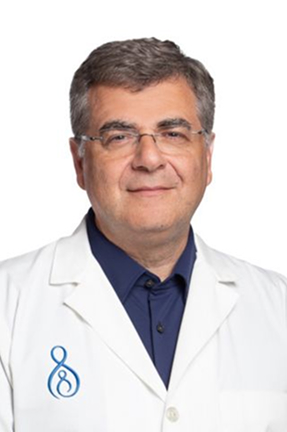 At Fertility Centers of New England, our Advanced Reproductive Surgery Program is led by Dr. Antonio Gargiulo, a reproductive endocrinologist and internationally recognized expert in minimally invasive reproductive surgery.
Dr. Gargiulo specializes in complex endometriosis excision and fertility-preserving and fertility-enhancing surgery. This specialized approach brings reproductive medicine and advanced surgical expertise together, allowing treatment decisions to consider both the disease itself and a patient’s future family-building goals.
“One of the most important differences today is that treating endometriosis and preserving fertility do not have to be separate conversations. When appropriate, we can consider both the disease and a patient’s future family-building goals when developing a treatment plan.” ~ Antonio Gargiulo, M.D.
Dolly Parton’s Story Still Matters
Dolly Parton’s experience with endometriosis became one small but deeply personal chapter in an extraordinary life.
She would later speak openly about not having biological children and ultimately found another way to think about motherhood and her impact on children. Through Dolly Parton’s Imagination Library, the literacy program she founded in 1995, hundreds of millions of books have been gifted to young children around the world.
Her path was uniquely her own.
But for people hearing her endometriosis story today, there is an important distinction to make: her experience in the 1980s does not define what an endometriosis diagnosis means today.
There are more options. There is greater awareness. And there is a much stronger understanding that treating endometriosis should include conversations about pain, quality of life and fertility.
When Should You See a Fertility Specialist for Endometriosis?
You may want to speak with a fertility specialist or reproductive surgeon if you:
- Have endometriosis and are having difficulty becoming pregnant
- Have been diagnosed with an ovarian endometrioma
- Are considering surgery and want to understand how it could affect your fertility
- Have had previous endometriosis surgery
- Have severe or recurring symptoms
- Are concerned about your ovarian reserve
- Want children in the future but are not ready to become pregnant
- Want to understand whether egg or embryo freezing may be appropriate
You do not have to wait until you are actively trying to conceive to ask how endometriosis could affect your fertility.
Endometriosis and Fertility: Frequently Asked Questions
Can you get pregnant if you have endometriosis?
Yes. Many people with endometriosis become pregnant, either without assistance or with fertility treatment. The impact of endometriosis on fertility varies based on factors including age, ovarian reserve, the location and severity of disease, fallopian tube function and other fertility factors.
Does everyone with endometriosis need surgery?
No. Surgery is not appropriate or necessary for every patient with endometriosis. Treatment should be individualized based on symptoms, disease location and severity, previous treatment, fertility goals and other factors.
Can endometriosis come back after surgery?
Endometriosis is a chronic disease, and symptoms or lesions can recur following treatment. Long-term management should therefore be individualized and may involve ongoing medical and reproductive care.
Can endometriosis affect egg quality or ovarian reserve?
Endometriosis, particularly when it involves the ovaries, may be associated with changes in ovarian function and ovarian reserve. Surgery involving the ovaries may also affect ovarian reserve, making individualized treatment planning especially important.
Should I freeze my eggs if I have endometriosis?
Not everyone with endometriosis needs to freeze their eggs. However, fertility preservation may be worth discussing for some patients, particularly those with ovarian endometriomas, diminished ovarian reserve, anticipated ovarian surgery, progressive disease, or plans to delay pregnancy.
Is hysterectomy the only treatment for severe endometriosis?
No. A hysterectomy is not the only treatment for severe endometriosis and is not appropriate for everyone. Depending on the individual, options may include medication, minimally invasive excision surgery, fertility treatment and other approaches. Patients who want to preserve their fertility should discuss those goals before undergoing reproductive surgery.
Endometriosis Care That Considers Your Future
Dolly Parton’s story is a reminder of how profoundly endometriosis can affect a person’s life. It is also a reminder of how far reproductive medicine has come.
If you have endometriosis and are concerned about your fertility, you deserve to understand your options before making decisions about your care.
At Fertility Centers of New England, our fertility specialists and Advanced Reproductive Surgery team work together to develop personalized treatment plans that consider your symptoms, reproductive health and future family-building goals.