
News
Wildfire Smoke and IVF: What Patients Should Know About Air Quality
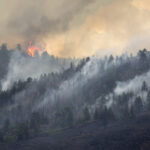
As wildfire smoke affects more regions across North America, many fertility patients are asking the same question. Can poor air quality reduce IVF success?
Recent studies have explored whether wildfire smoke and air pollution may influence fertility treatment outcomes. While the research is important, it is equally important to understand what these studies actually show, and what they do not.
Current evidence suggests an association between poor air quality and reproductive outcomes, but it does not prove that wildfire smoke directly causes IVF failure. Understanding that distinction can help patients make informed decisions without unnecessary anxiety.
What Does the Research Say About Wildfire Smoke and IVF?
Several scientific studies, including a recent publication that received widespread media attention, have reported an association between exposure to poor air quality and reproductive outcomes.
These findings are scientifically valuable because they raise important questions that deserve further investigation. However, it is essential to recognize that these are observational studies.
Observational research can identify patterns between two events, such as periods of poor air quality and lower pregnancy rates, but it cannot prove that one caused the other. Many additional factors may influence reproductive outcomes, including overall health, lifestyle, age, underlying fertility conditions, and environmental exposures.
In other words, current research cannot conclude that temporary exposure to wildfire smoke directly reduces IVF success rates.
The differences reported in these studies are relatively modest. While statistically meaningful, they should not be interpreted as evidence that IVF treatment is likely to fail because of several days of poor outdoor air quality.
Modern IVF Laboratories Are Designed to Protect Embryos
One important point that is often overlooked in media coverage is that IVF laboratories have been designed for decades with air quality in mind.
Embryos are extraordinarily sensitive biological systems. Because of this, modern embryology laboratories invest heavily in protecting them from environmental contaminants throughout embryo development.
High quality IVF laboratories commonly include:
- Advanced HEPA filtration systems that remove microscopic airborne particles
- Activated carbon filtration designed to reduce volatile organic compounds (VOCs)
- Carefully controlled temperature and humidity
- Positive pressure laboratory environments that limit the entry of unfiltered air
- Continuous monitoring of laboratory conditions
- Rigorous quality control programs that help maintain optimal embryo culture conditions
These safeguards were not developed in response to recent wildfire events. They have long been part of the standard design of leading IVF laboratories because maintaining a stable, clean laboratory environment is essential for successful embryo development.
In fact, one study conducted during Australia’s devastating “Black Summer” wildfires found that IVF laboratories equipped with advanced air filtration maintained excellent indoor air quality despite severe outdoor smoke. Clinical pregnancy rates and live birth rates remained stable throughout the study period.
These findings are reassuring for patients undergoing IVF treatment.
What We Still Do Not Know
The IVF laboratory is only one part of the reproductive process.
Embryo development begins in the laboratory, but implantation, placental development, and pregnancy occur within the mother’s body.
At present, researchers do not know with certainty whether short term exposure to wildfire smoke or other episodes of poor outdoor air pollution meaningfully affects these biological processes after embryo transfer.
There are biologically plausible mechanisms, including inflammation and oxidative stress, that warrant continued investigation. However, the current human evidence remains incomplete.
This is precisely why additional research is needed.
Should You Delay IVF Because of Wildfire Smoke?
For most patients, probably not.
Based on current evidence, there is not enough scientific support to recommend postponing IVF treatment simply because outdoor air quality is temporarily poor.
For many individuals and couples, delaying fertility treatment carries its own risks, particularly when maternal age, diminished ovarian reserve, or other fertility factors are important considerations.
Treatment decisions should always be individualized and made in consultation with your fertility specialist. Your physician can help determine the best course of action based on your specific medical history and treatment plan.
Practical Steps to Reduce Exposure During Poor Air Quality
Although there is no reason for panic, there are several common sense steps that may help reduce unnecessary exposure during periods of significant wildfire smoke or unhealthy air quality:
- Monitor your local Air Quality Index (AQI).
- Limit prolonged outdoor activity when air quality reaches unhealthy levels.
- Reduce strenuous outdoor exercise during smoke events.
- Keep windows and doors closed during periods of poor air quality.
- Use a portable HEPA air purifier indoors when available.
- Wear a properly fitted N95 respirator if prolonged outdoor exposure is unavoidable.
- Avoid additional indoor pollutants such as cigarette smoke or wood burning fireplaces.
- Continue taking all prescribed fertility medications unless instructed otherwise by your physician.
These recommendations are reasonable for everyone, not only those undergoing fertility treatment.
Frequently Asked Questions About Wildfire Smoke and IVF
Can wildfire smoke reduce IVF success?
Current research suggests an association between poor air quality and reproductive outcomes, but it has not proven that wildfire smoke directly causes IVF failure. More research is needed to understand whether temporary exposure has a meaningful impact on fertility treatment.
Should I cancel my embryo transfer because of poor air quality?
For most patients, no. Current evidence does not support routinely delaying embryo transfer or IVF treatment because of temporary wildfire smoke. Your fertility specialist can help determine what is appropriate based on your individual circumstances.
Are IVF laboratories protected from poor outdoor air quality?
Yes. Modern IVF laboratories use sophisticated air filtration systems, environmental controls, and continuous monitoring to help protect embryos from airborne contaminants throughout embryo culture.
Can air pollution affect fertility?
Several observational studies have linked long term exposure to air pollution with reproductive health concerns. However, researchers continue to study how environmental exposures may affect fertility treatment outcomes, and many important questions remain unanswered.
What can I do to reduce my exposure?
Monitoring local air quality, staying indoors during severe smoke events, using HEPA filtration when available, and following your physician’s recommendations are practical steps that may help reduce exposure.
The Bottom Line
Wildfire smoke and poor air quality are understandable concerns for anyone undergoing fertility treatment. While ongoing research suggests there may be a relationship between air pollution and reproductive outcomes, current evidence does not show that temporary exposure to wildfire smoke directly causes IVF failure.
Modern IVF laboratories are specifically designed to protect embryos through advanced air filtration, carefully controlled laboratory environments, and rigorous quality control measures. For most patients, there is no evidence based reason to postpone IVF treatment solely because of temporary poor outdoor air quality.
Science advances by asking important questions and carefully evaluating the evidence, not by drawing conclusions before the evidence is complete.
If you have concerns about wildfire smoke, air quality, or your IVF treatment plan, speak with your fertility specialist. Every patient’s situation is unique, and decisions should always be guided by individual medical circumstances and the best available scientific evidence.
At Fertility Centers of New England, our physicians closely follow emerging research to provide compassionate, evidence based fertility care and help patients make informed decisions with confidence.